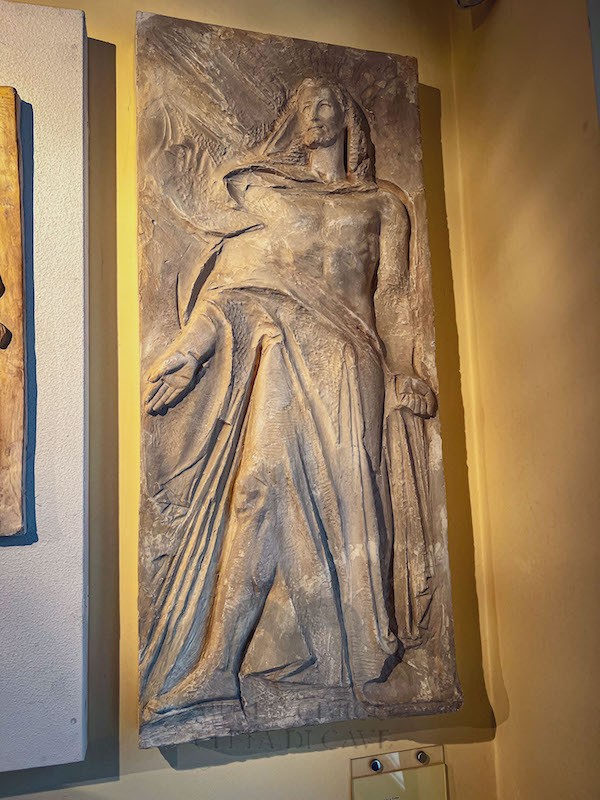
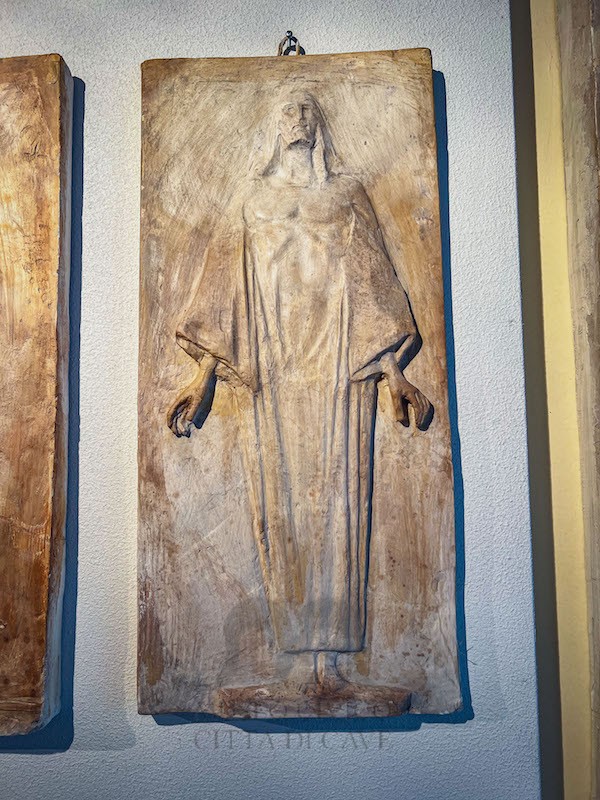
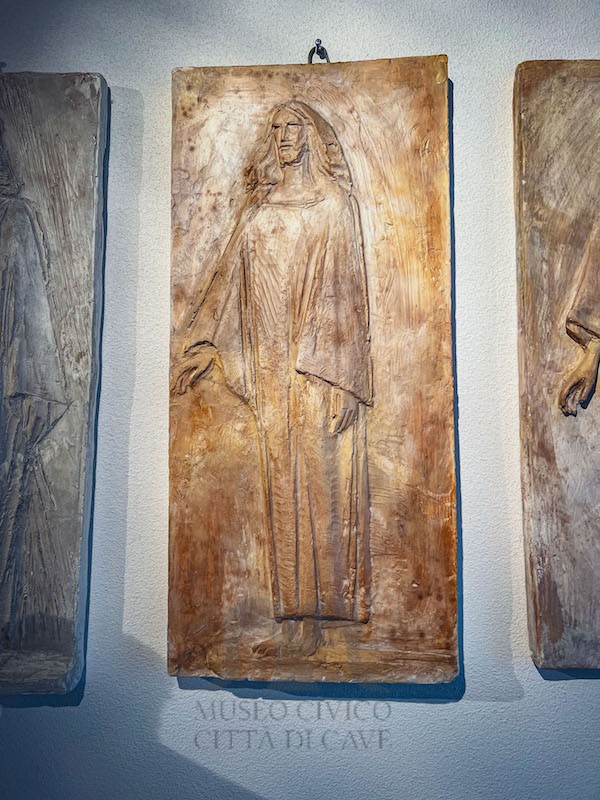
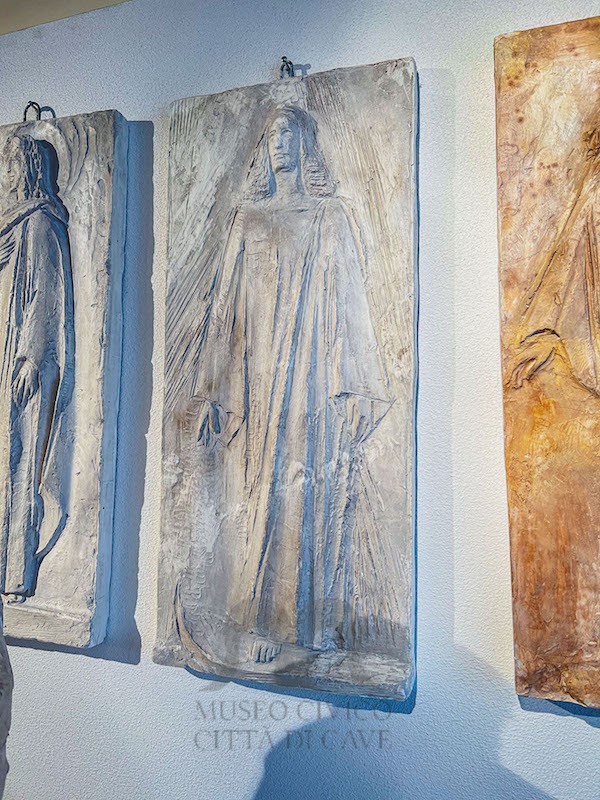
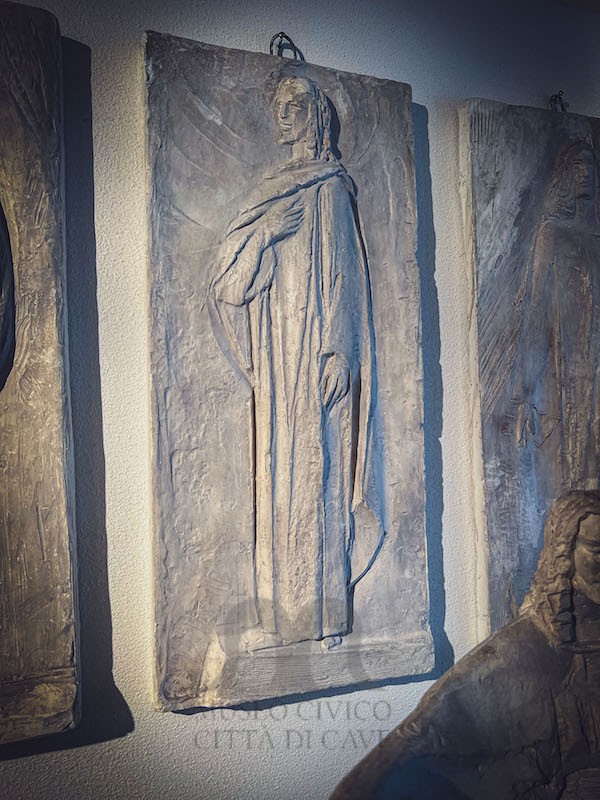
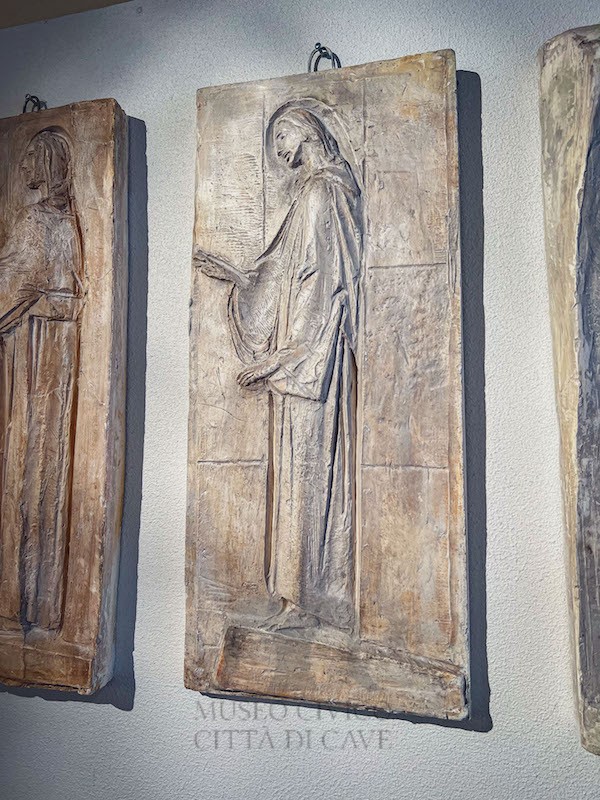
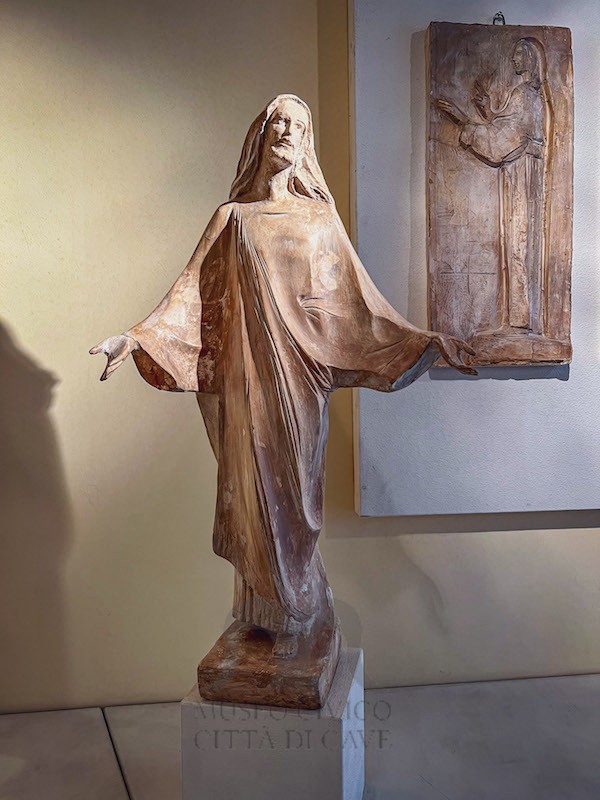
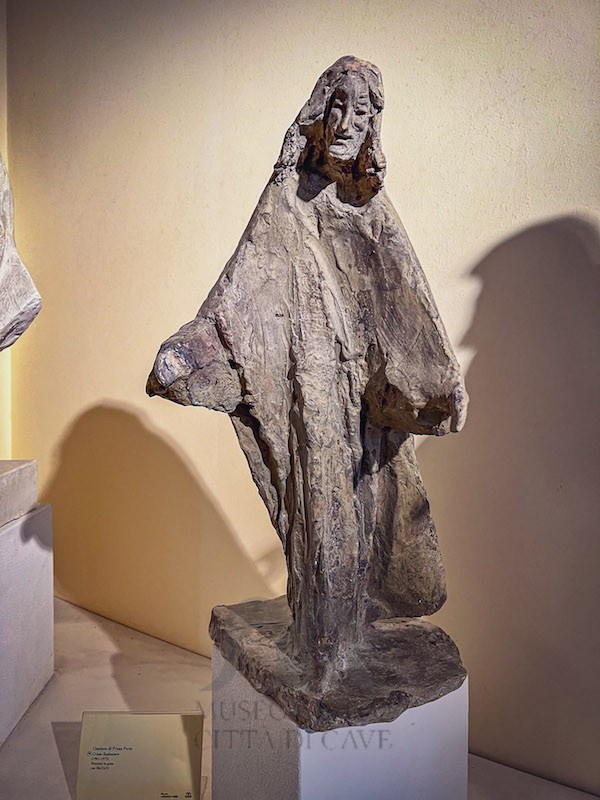
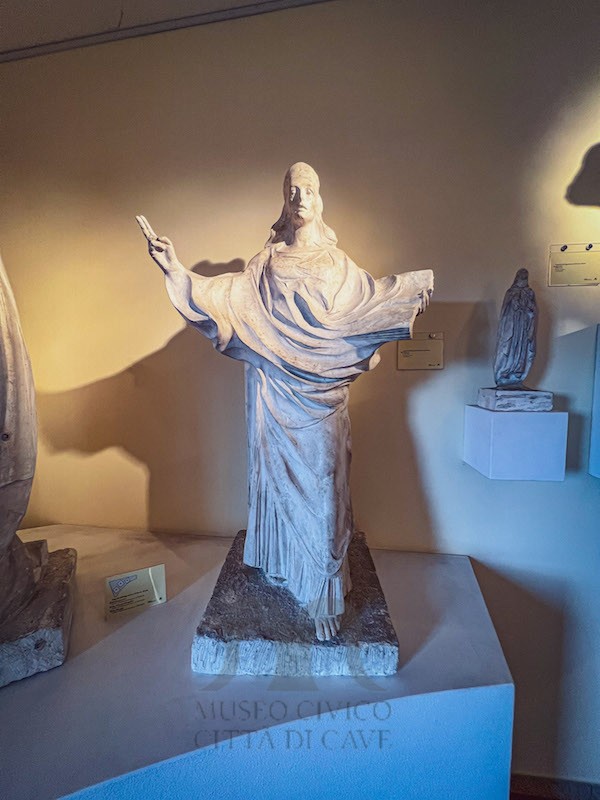
On this floor, we find the artist’s works spanning from 1960 to 1975. In the first area, there are collected studies and sketches in bas-relief for the “Christ Alpha Omega” of the Verano Cemetery and for the “Redentore” of the Prima Porta Cemetery in Rome.
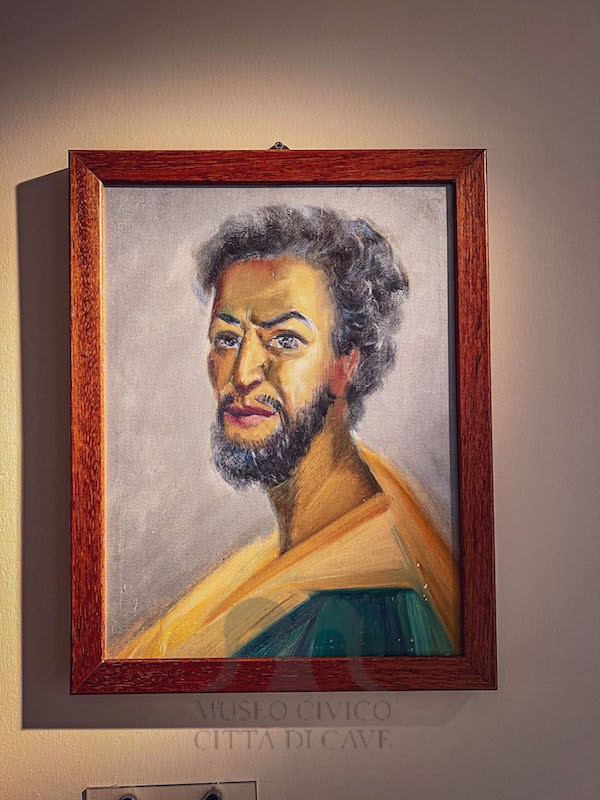
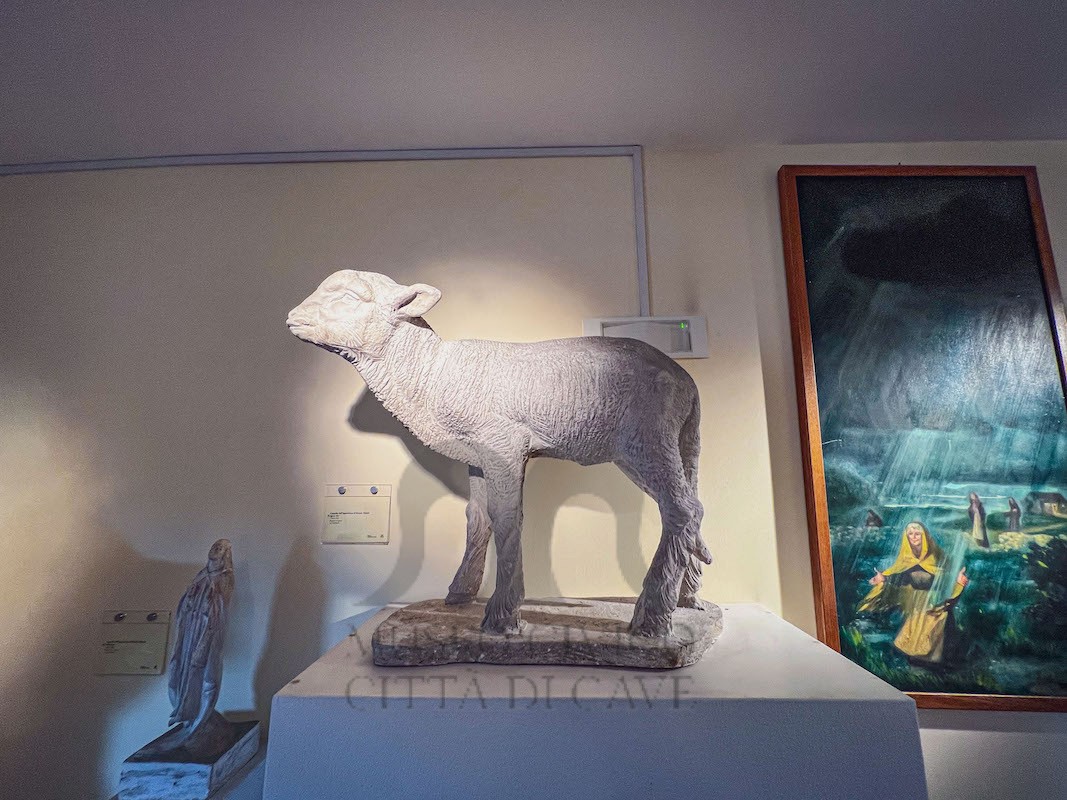
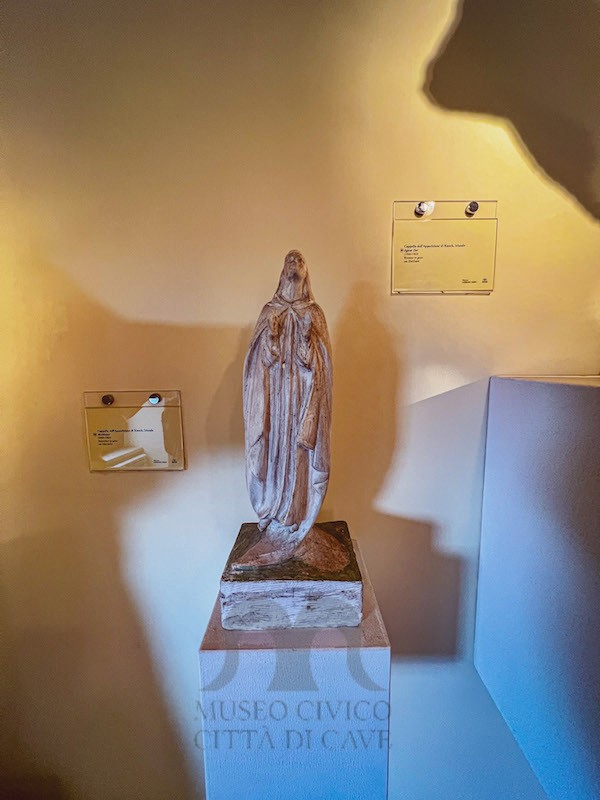
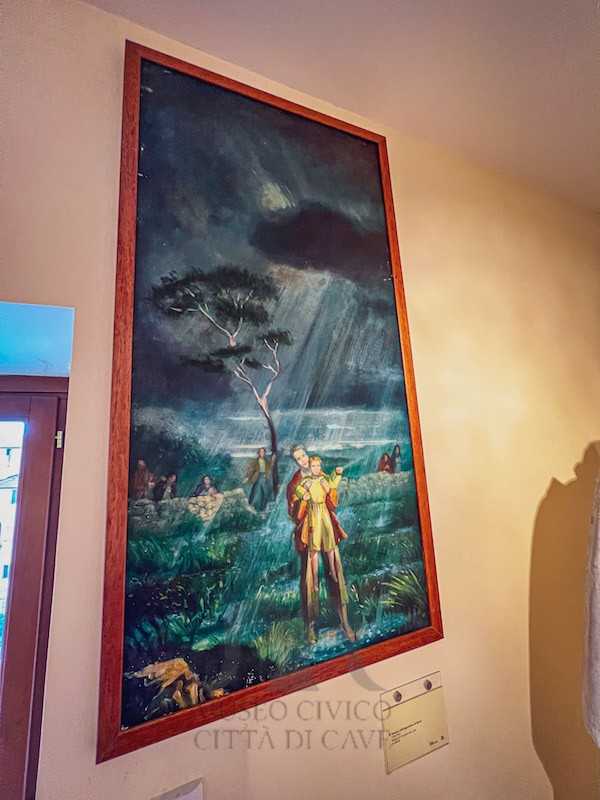
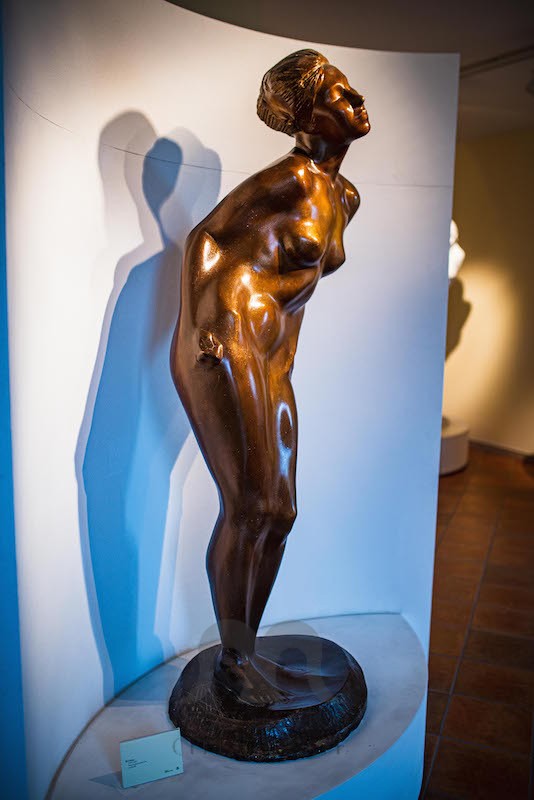
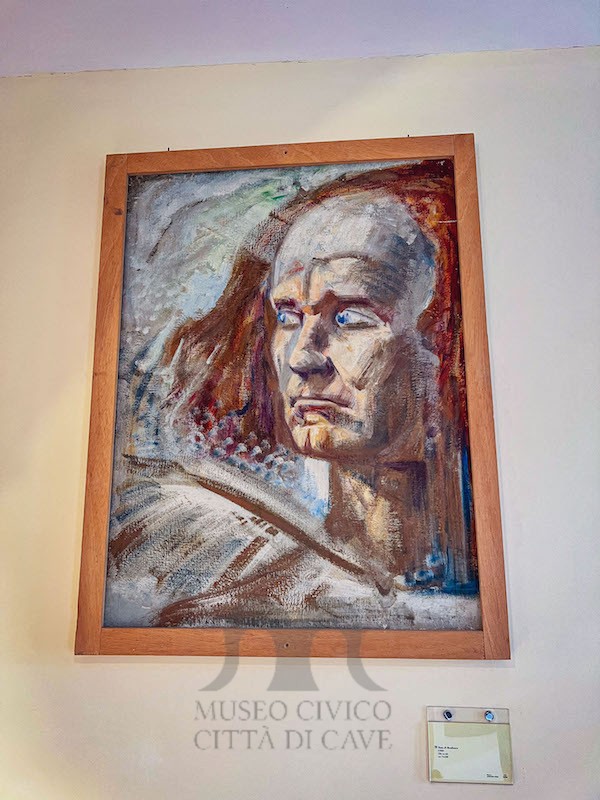
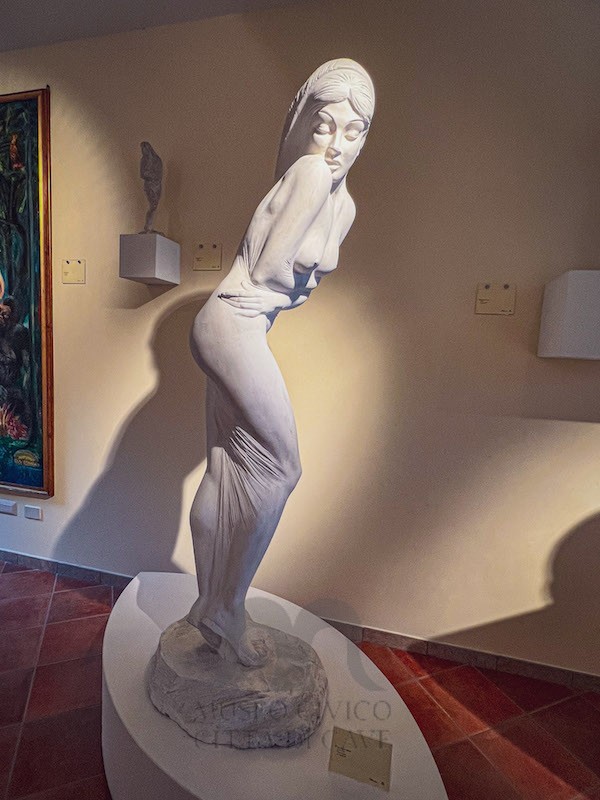
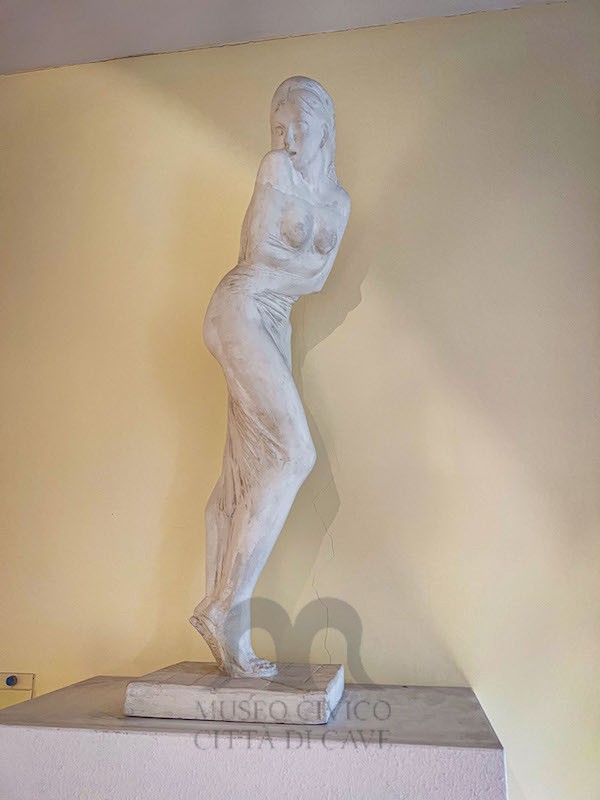
Among the most notable works there is the sketch created for the “Chapel of the Apparition” at the Irish sanctuary of Knock. Then, a statue, studied for years, “L’attesa” (1956-1965) in patinated gold plaster. With its fluid form and elegantly tense body, it symbolizes the struggle between matter and spirit. It can be considered the synthesis of the artist’s sculptural work. Later on, it was made in bronze and marble for the museum in Jakarta. At the back of the room there are some paintings including “Self-Portrait” from 1975, created with watercolors and transparent colors. The work depicts the artist in front of a mirror painting his own fading image, it seems almost a premonition.
Verano Cemetery in Rome Christ Alpha-Omega
(1957) Plaster bas-relief, 100×45 cm
Manly nude leaning on a pole
(1957) Seven plaster bas-reliefs, 25×58 cm
Christ Alpha Omega
(1957) Seven plaster bas-reliefs, 27×60 cm
Christ Alpha Omega
(1957) Seven plaster bas-reliefs, 27×61 cm
Christ Alpha Omega
(1957) Seven plaster bas-reliefs, 27×61 cm
Christ Alpha Omega
(1957) Seven plaster bas-reliefs, 27×61 cm
Christ Alpha Omega
(1957) Seven plaster bas-reliefs, 26×61 cm
Christ Alpha Omega
(1957) Seven plaster bas-reliefs, 25×65 cm
Guadagnolo: Christ with Open Arms
(1950) Plaster bas-relief, 10x18x58 cm
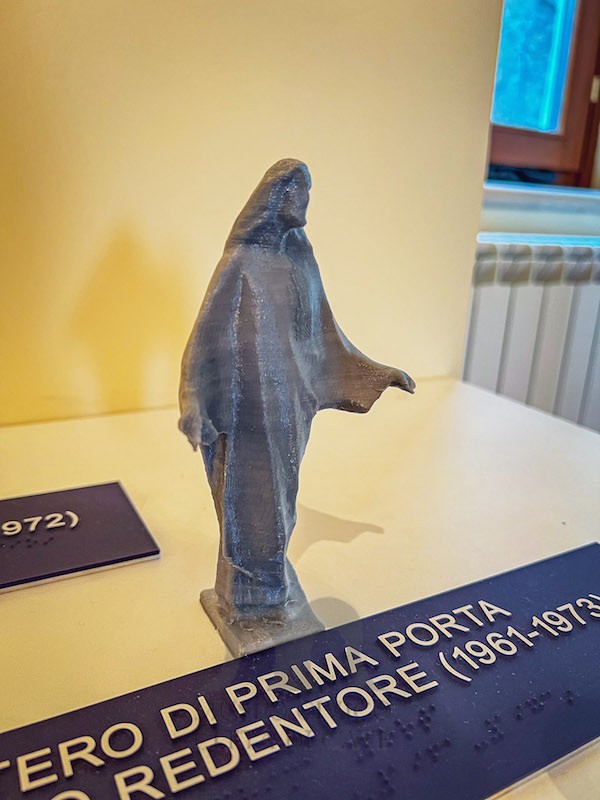
Prima Porta Cemetery: Christ the Redeemer
(1961-1973) Plaster sketch, 15x19x75 cm
Prima Porta Cemetery: Christ the Redeemer
(1961-1973) Plaster sketch, 28x22x55 cm
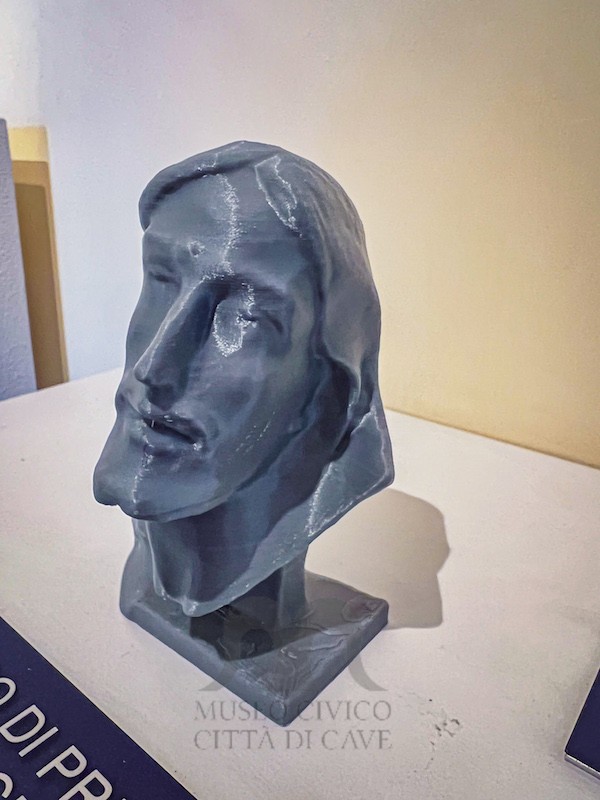
Prima Porta Cemetery: Head of Christ the Redeemer
(1970) Plaster sketch, 23x27x70 cm
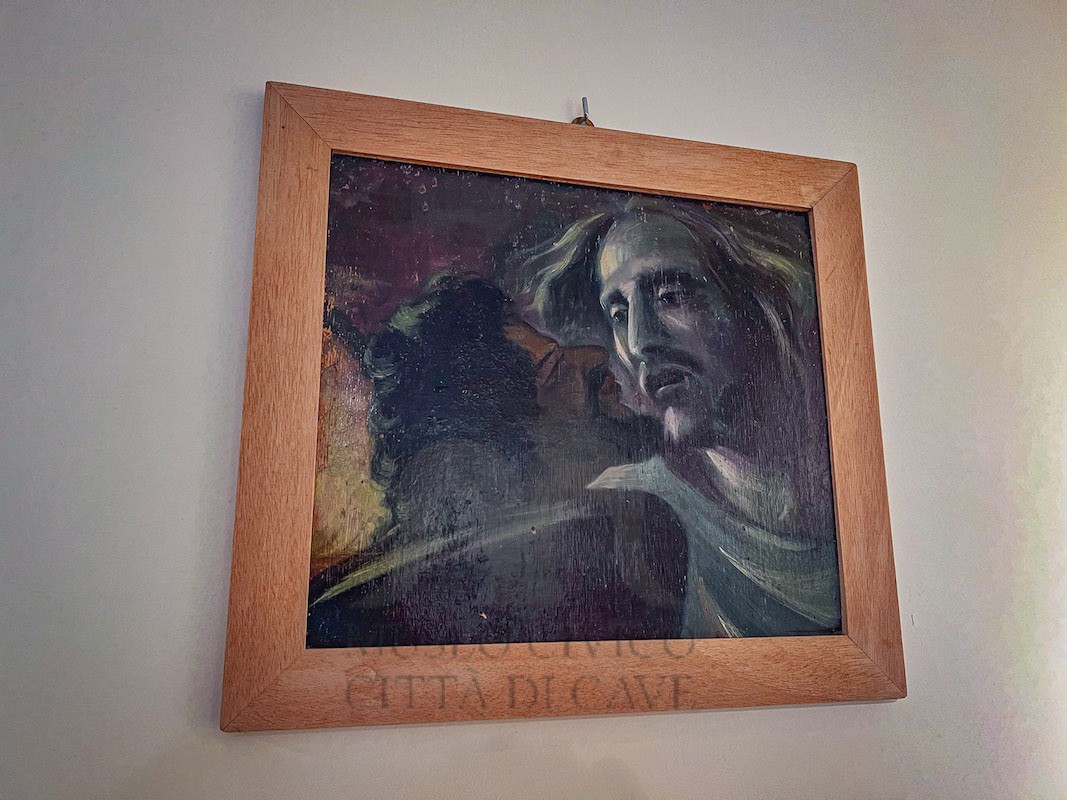
Judas Kiss
(1942) Oil on panel, 44×38 cm
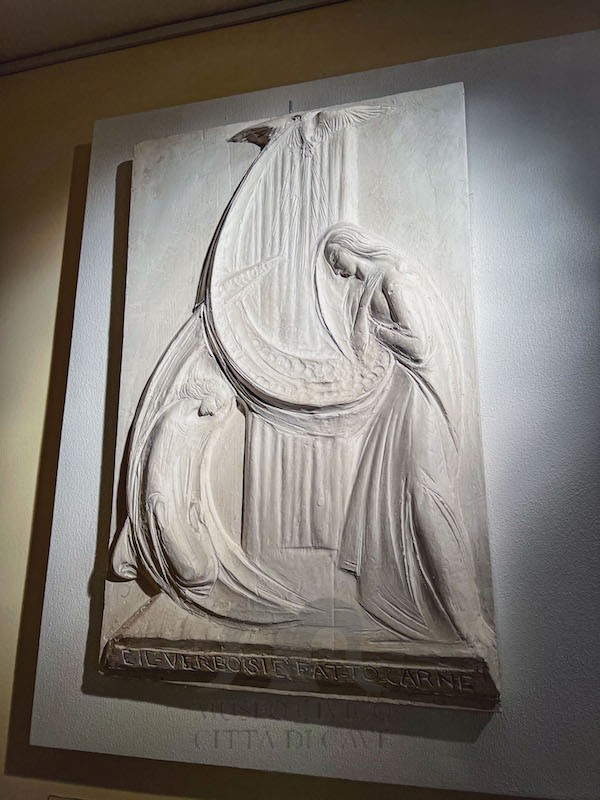
Enrico Caradonna Chapel: Annunciation
(1971) Plaster bas-relief, 51×80 cm
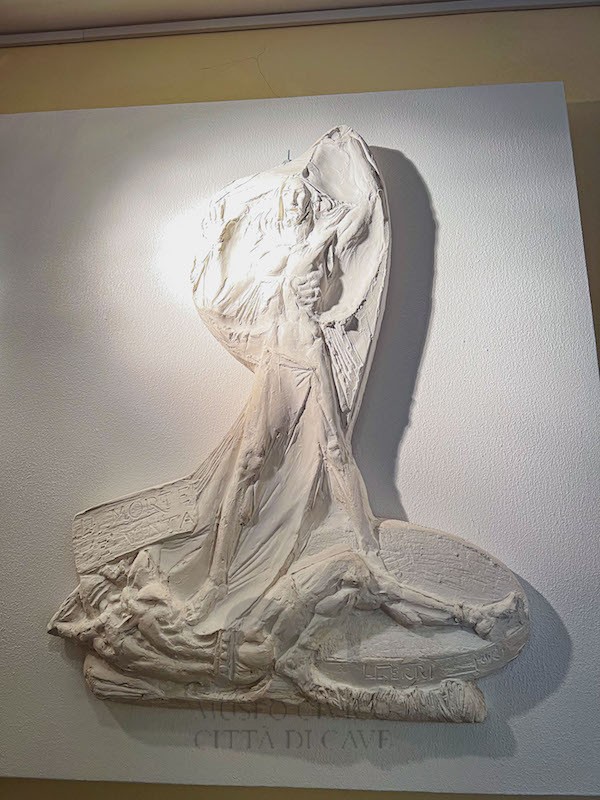
Enrico Caradonna Chapel: Resurrection
(1971) Plaster bas-relief, 63×80 cm
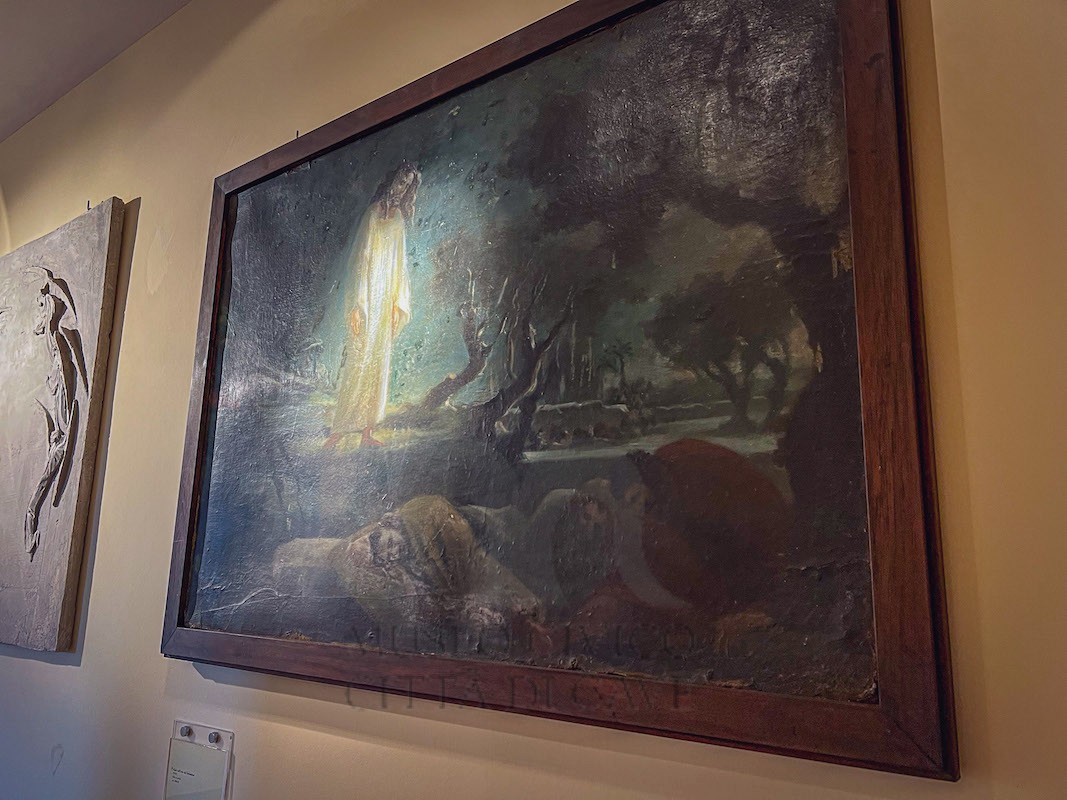
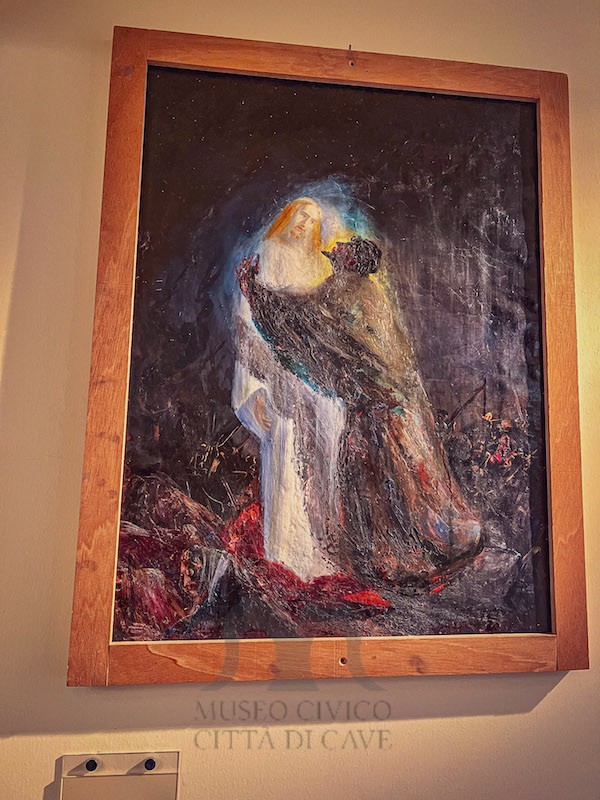
Jesus in the Garden of Gethsemane
(1955) Oil on canvas, 100×70 cm
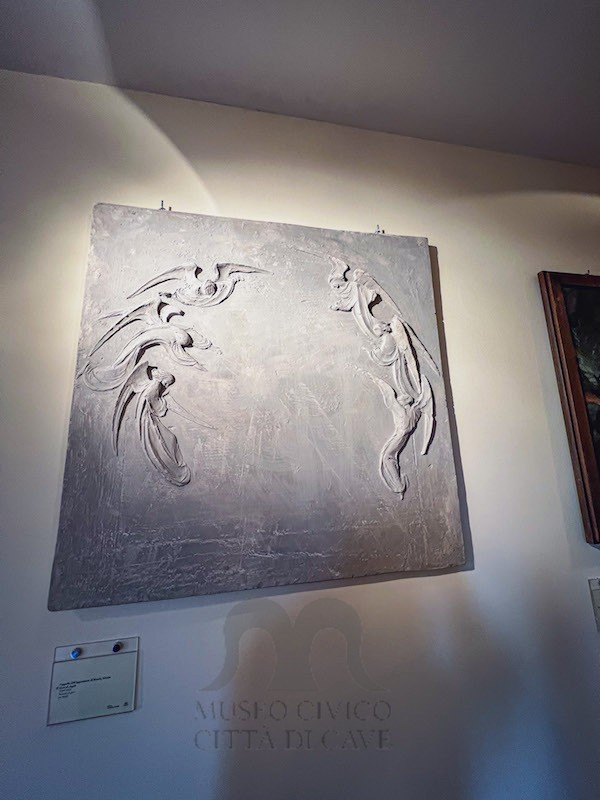
Chapel of the Apparition in Knock, Ireland: Choir of Angels
(1960-1963) Plaster sketch, 90×90 cm
Kiss of Judas with soldiers
1958) Oil on canvas, 64×86 cm
Judas the Obscure
(1959-1961) Oil on canvas, 35×45 cm
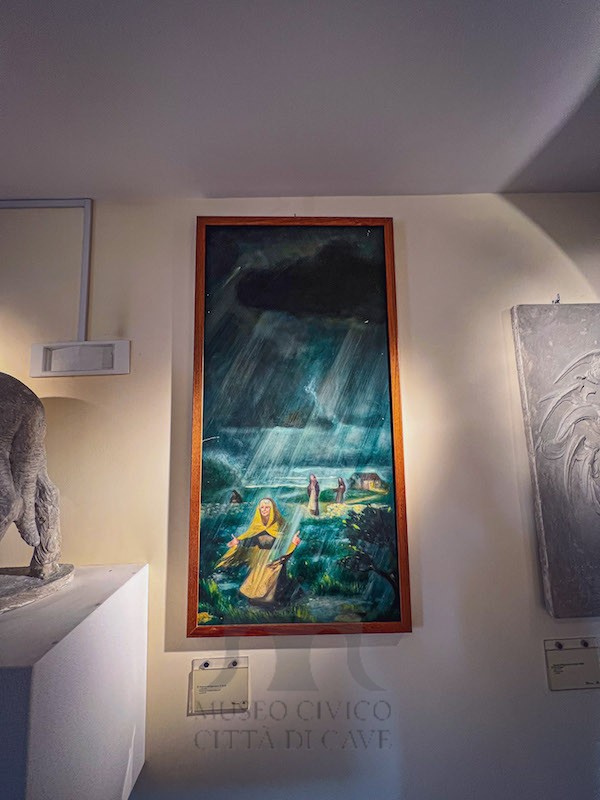
Witnesses to the Knok Apparition
(1960-1963) Mosaic sketch, oil on canvas, 60×120 cm
Chapel of the Apparition in Knock, Ireland: Agnus Dei
(1960-1963) Plaster sketch, 25x55x64 cm
Knock Apparition Chapel, Ireland: Madonna
(1960-1963) Plaster sketch, 16x13x42 cm
Knock Apparition Chapel, Ireland: St. Joseph
(1960-1963) Plaster sketch, 38x41x118 cm
Chapel of the Apparition in Knock, Ireland: Madonna nettles
(1960-1963) Plaster sketch, 50x40x135 cm
Knock Apparition Chapel, Ireland: St. John the Evangelist
(1960-1963) Plaster sketch, 46x45x120 cm
Witness the appearance of Knock
(1960-1963) Mosaic sketch, oil on canvas, 60×120 cm
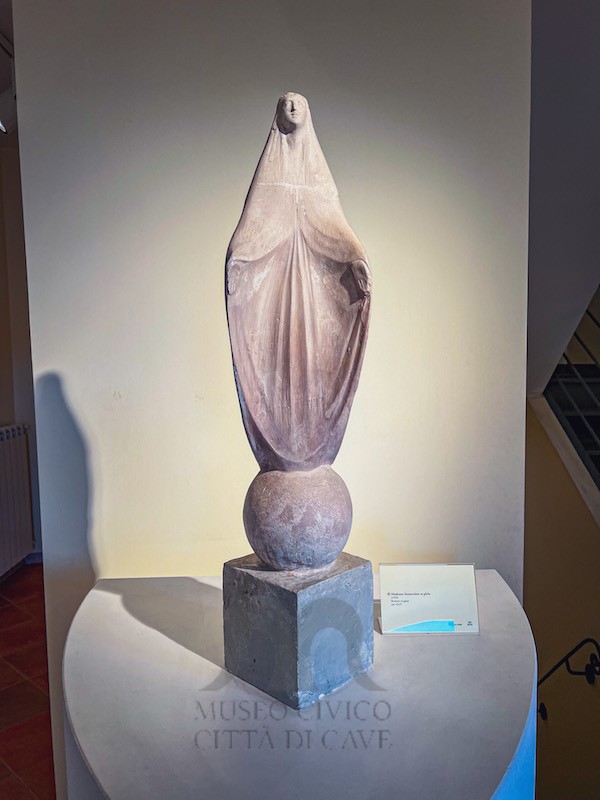
Immaculate Madonna on globe
(1950) Plaster sketch, 15×75 cm
St. Giuliana Falconieri: Immaculate Madonna on globe
(1952-1954) Plaster sketch, 35×130 cm
The waiting
(1956-1965) Gold patinated plaster statue, 60×180 cm
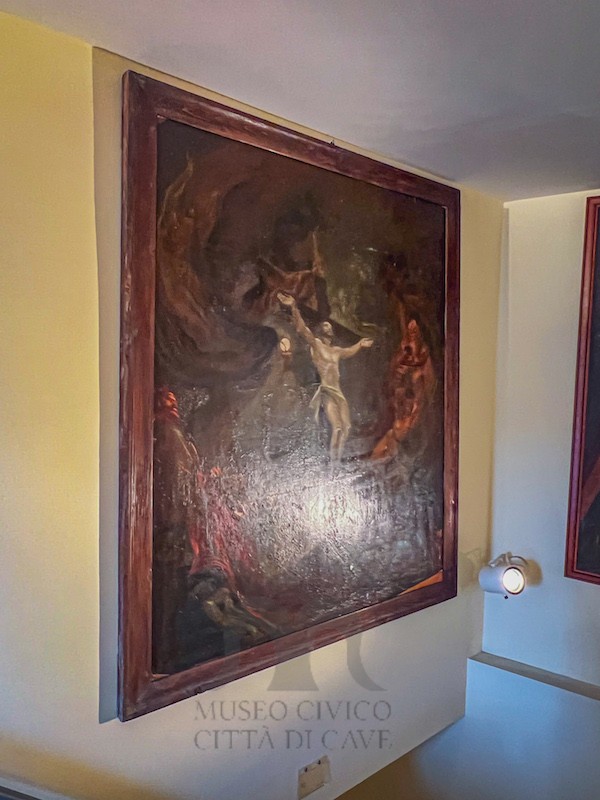
Christ Crucified, thieves and centurions
(1958) Oil on canvas, 212×80 cm
Deposition with four figures
(1970) Painted terracotta, 44x16x30 cm
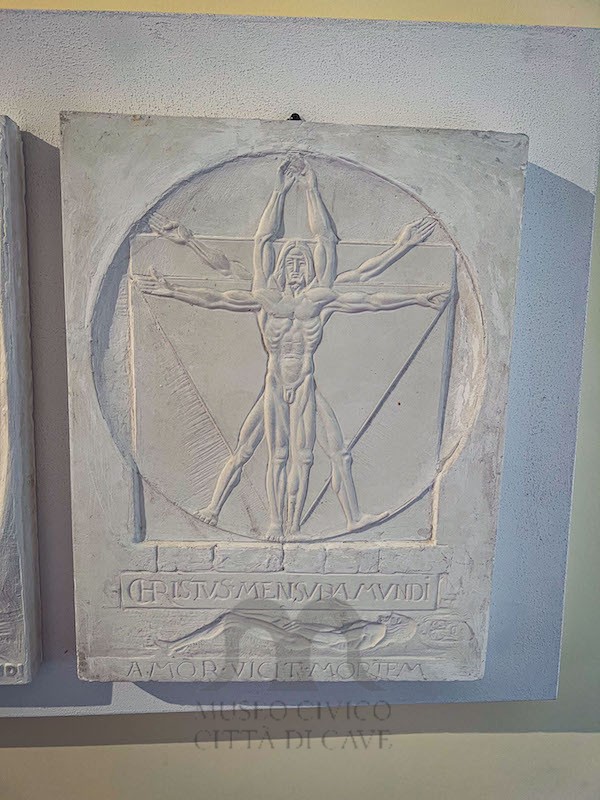
Christus Mensura Mundi Amor Vicit Mortem
(1974) Plaster bas-relief, 38×44 cm
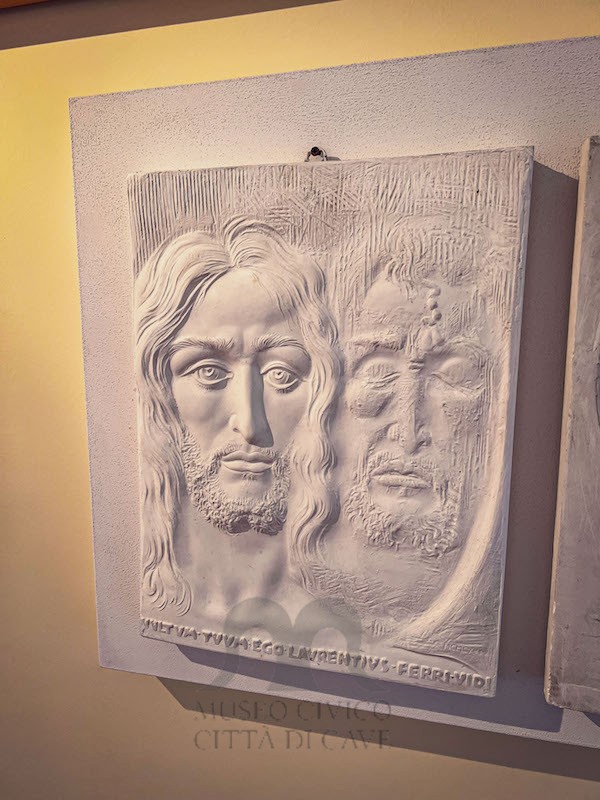
Face of the Living Christ and Face of the Shrouded Christ
(1974) Plaster bas-relief, 38×44 cm
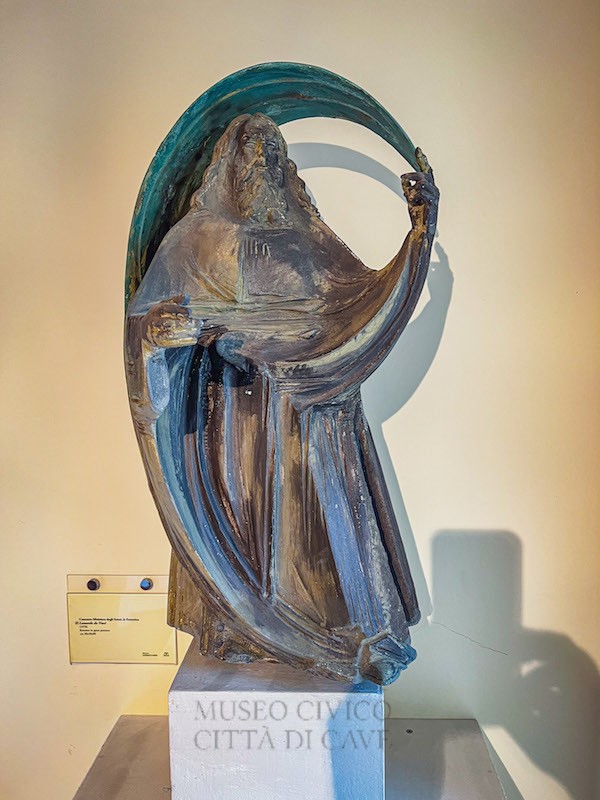
Leonardo da Vinci
(1970) Patinated plaster sketch, 20x20x80 cm
Cristoforo Colombo
(1970) Patinated plaster sketch, 28x15x64 cm
Monsignor Ferdinando Baldelli
(1972) Patinated plaster bust, 85x42x54 cm
Beethoven's Head
(1969) Oil on canvas, 75×100 cm
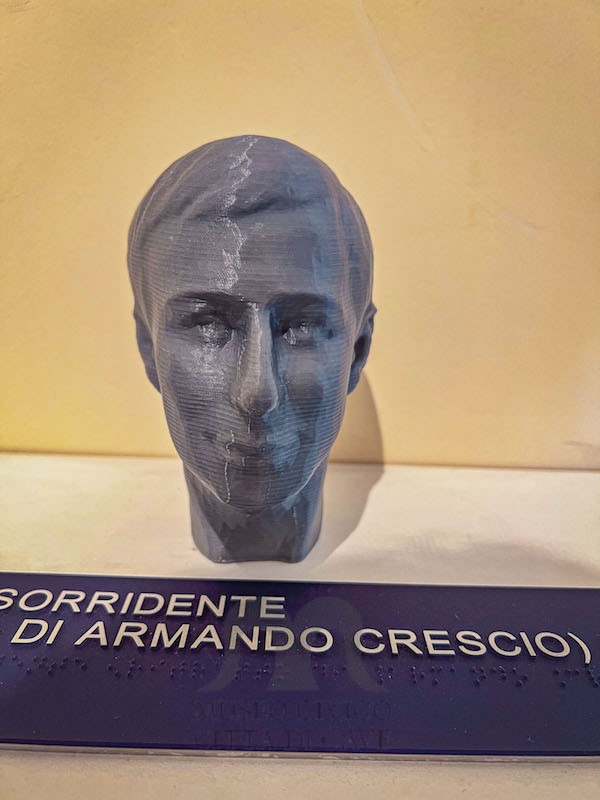
Smiling Young Man (Portrait of Armando Crescio)
(1972) Plaster head, 19x18x50 cm
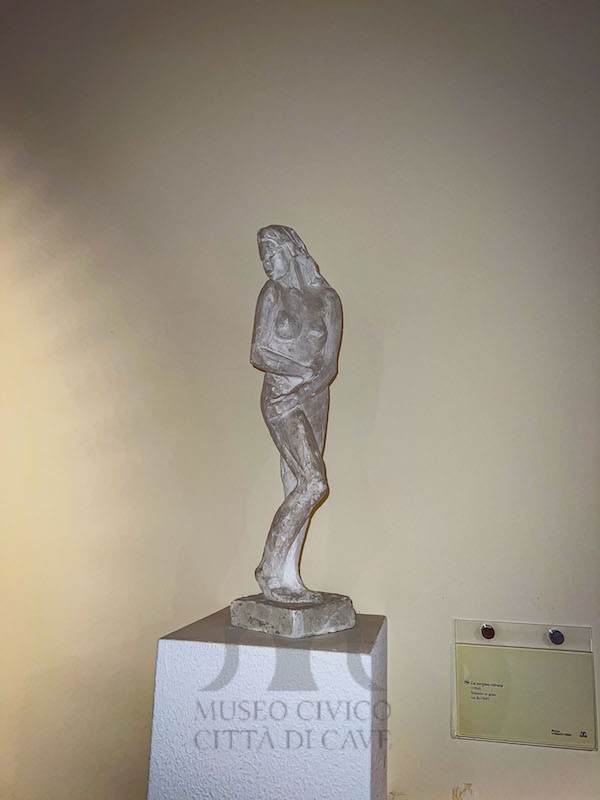
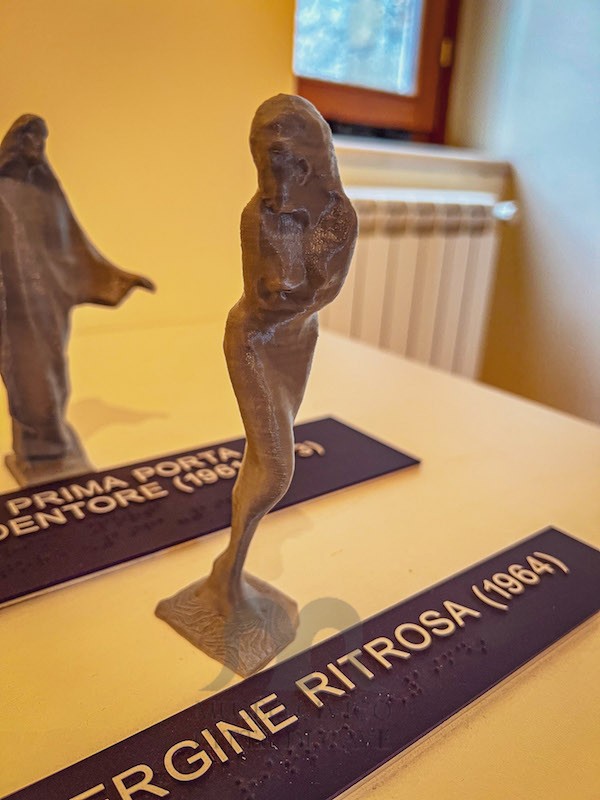
The reluctant virgin
(1964-1965) Plaster statue, 70x50x180 cm
The reluctant virgin
(1964-1965) Plaster sketch, 24x21x90 cm
The reluctant virgin
(1964) Plaster sketch, 8x10x45 cm
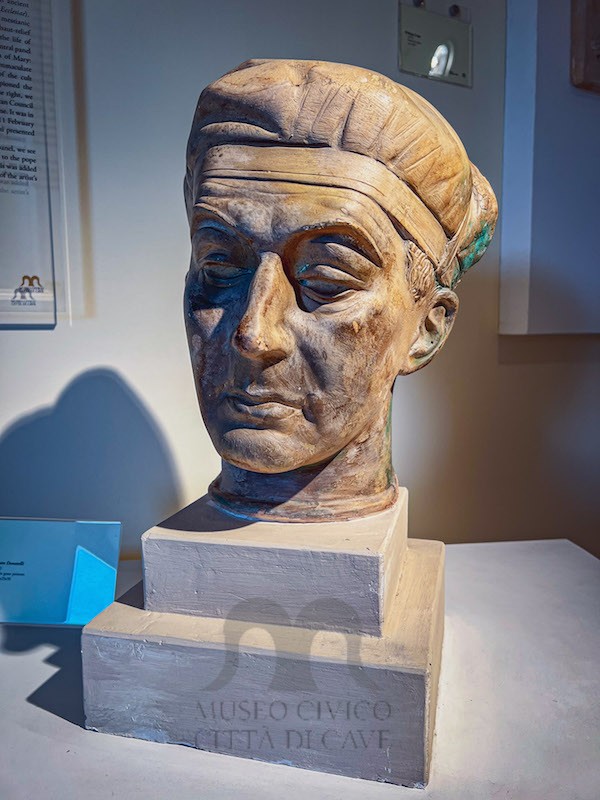
Renato Donatelli
(1972) Head in patinated plaster, 25x25x50 cm
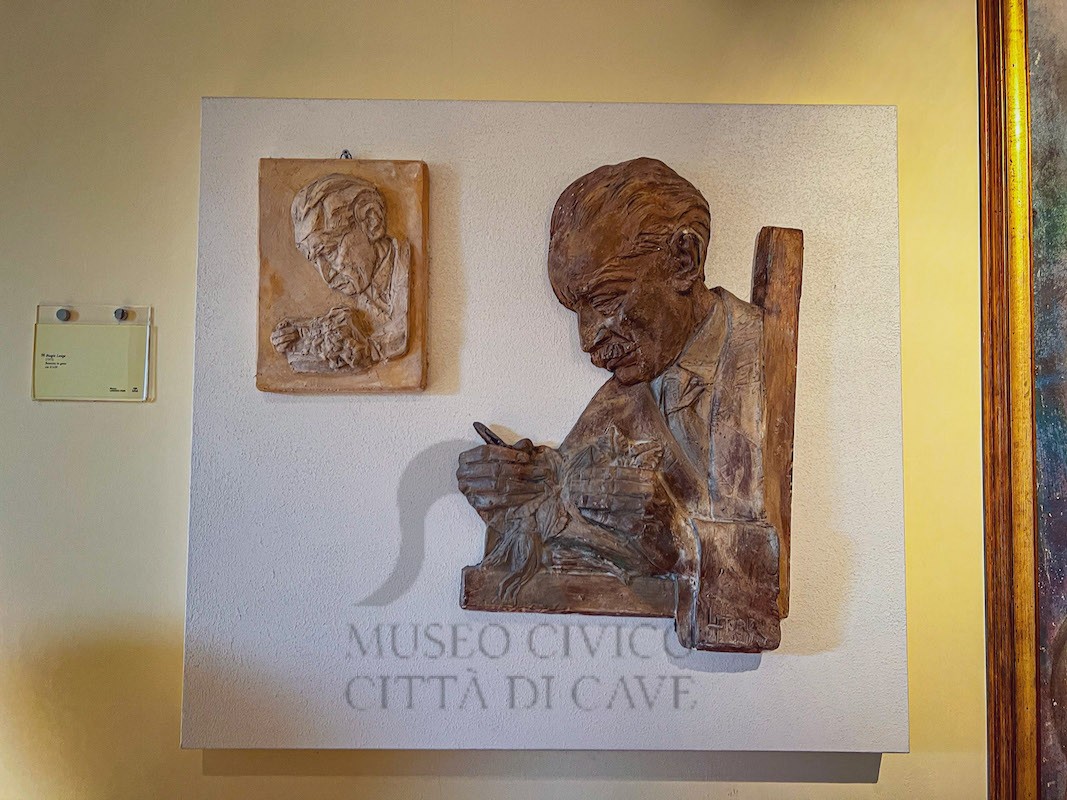
Biagio Longo together
(1971) Plaster sketch
Vietnam to New York
(1973-1974) Oil on canvas, 132×244 cm
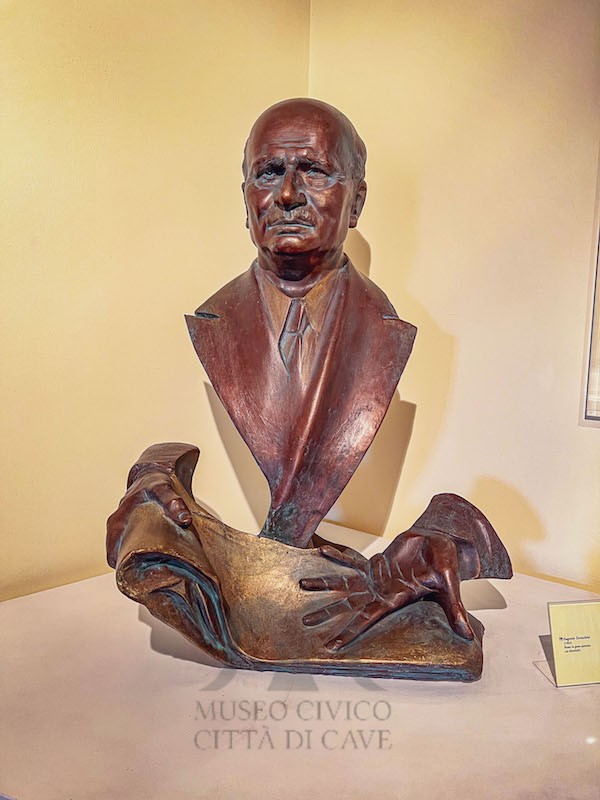
Eugenio Terrachini
(1964) Patinated plaster bust, 40x44x82 cm
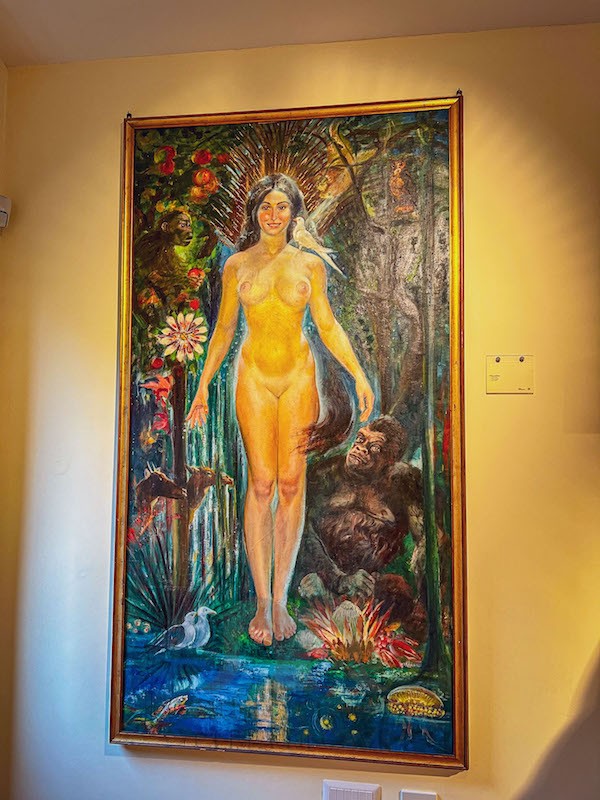
Eve on Eden
(1973-1974) Oil on canvas, 112×215 cm
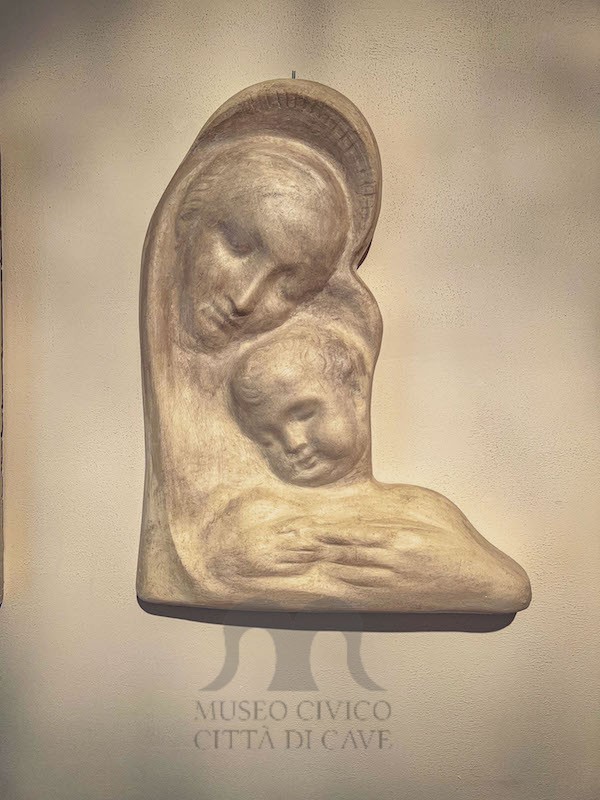
Immaculate Madonna with baby Jesus in her arms
(1960) Bassorilievo in gesso, cm 36×48
Immaculate Madonna with baby Jesus and dragon
(1971) Plaster bas-relief, 29×46 cm
Maria and Elisabetta
(1971) Plaster bas-relief, 34×45 cm
Immaculate Madonna on globe
(1950)
Head of Christ the Redeemer
(1970)
Christ the Redeemer
(1961-1973)
Smiling Young Man (Portrait of Armando Crescio)
(1972)
The reluctant virgin
(1964)
Now ninth
(1941) Oil on panel, 171×200 cm
Jesus under the cross
(1933-1937) Oil on panel, 122×198 cm
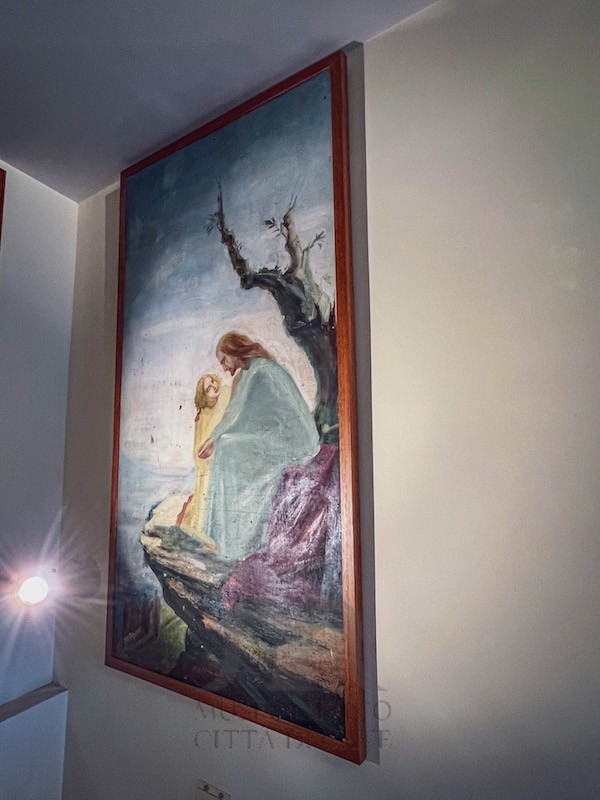
Jesus and St. John in a rock outcrop
(1953-1961) Oil on panel, 120×222 cm
Non solo si doveva bilanciare lo slancio verticale della magnifica chiesa barca, ma anche la piattaforma a tre metri dal piano del pavimento, il che “…poneva grandi problemi di rapporti di misure, armonizzazione di linee, di masse e volumi. le misure, secondo lo scultore, dovevano essere suggerite dagli stessi rapporti costruttivi del tempio: il rettangolo doppio quadrato, 1:2” … “L’eccezionalità del carattere monumentale.. escludeva gli elementi del presepio tradizionale, eliminando quei tratti folcloristici e pittorico teatrali, pur d’effetto, ma fondeva gli elementi paesistici e della grotta per delineare con le masse una linea curva concava…”. Nella relazione si legge che “… la simmetria, obbligata, era resa meno geometricamente scontata da una zona dinamica di linee a sinistra e una statica a destra equilibrantesi al centro nel Bambino, punto di convergenza anche della luce, massima e calda al centro, freddo e lunare ai lati, una illuminazione senza ombre..”. Lo scultore montò una piattaforma in scala nel suo studio, per misurare gli effetti di scorcio e correggerli prospetticamente. Tutto questo si è perso, assieme alla configurazione originale delle statue, alle scenografia, all’ambientazione in Sant’Andrea della Valle e al ‘fuoco fisso’ dell’osservazione. Le statue , ridotte all’essenziale, hanno oggi una diversa rilevanza. Il bambino appare sovradimensionato per ragioni prospettiche sia perché la Madonna si trovava nel punto più alto della scena a oltre tre metri, sia prece doveva essere la replica esatta di quello ‘modellato da San Vincenzo Pallotti’ e come quello antico, smontabile per essere mostrato ai fedeli. In 3 mesi lo scultore realizzò i bozzetti delle statue a 1/3, compreso un plastico illuminato. Le statue furono abbozzate nude e poi vestire: si effettuò una ricerca storica e poi, per la posa, si noleggiarono i costumi dalle sartorie teatrali. Posò il figlio Sirio per il San Giuseppe, per il re Assiro l’ex campione di boxe Erminio Spalla, per il re Indiano inginocchiato un nerboruto ospite ottantenne del Cottolengo Don Orione, la testa è l’autoritratto dello scultore. Le statue furono realizzate in 9 mesi. Ferri rielaborò la Madonna michelangiolesca e San Giuseppe in senso spiritualistico: “..o tradizionalistico-classico, non soddisfacevano l’artista e i padri. Mi ritirai nel mio studio: c’erano la parte centrale, la parte spirituale, la più importante, dell’opera. Furono 60 giorni di lavoro continuo. Lavorai di giorno, lavorai di notte per vedere su luci violente gli effetti plastici”…”distaccare nettamente il mondo materiale, raffigurato dai Re magi, esaltando il mondo spirituale, raffigurato dai Re magi, esaltando il mondo spirituale con le linee purissime e semplici della Vergine”. L’evoluzione stilistica della sua ricerca lo porterà a un cambiamento sostanziale nelle forme e nei panneggi che si può apprezzare anche contemporaneo bozzetto per il concorso di secondo grado per le Porte di San Pietro. I padri Pallottini in seguito, pressati da difficoltà economiche, perderanno interesse, e il presepe sarà collocato nella cripta della Chiesa Regina Pacis, dove verrà inaugurato nel 1952. Questo grande spazio voltato a crociera, ambiente particolarmente suggestivo, oggi accoglie degnamente il Presepe Monumentale.
Sul nostro sito web utilizziamo i cookie per offrirvi l'esperienza più pertinente possibile, ricordando le vostre preferenze e le vostre visite ripetute. Facendo clic su "Accetta tutto", si acconsente all'utilizzo di TUTTI i cookie. Tuttavia, è possibile visitare "Impostazioni dei cookie" per fornire un consenso controllato.
This website uses cookies to improve your experience while you navigate through the website. Out of these, the cookies that are categorized as necessary are stored on your browser as they are essential for the working of basic functionalities of the website. We also use third-party cookies that help us analyze and understand how you use this website. These cookies will be stored in your browser only with your consent. You also have the option to opt-out of these cookies. But opting out of some of these cookies may affect your browsing experience.
Necessary cookies are absolutely essential for the website to function properly. These cookies ensure basic functionalities and security features of the website, anonymously.
Functional cookies help to perform certain functionalities like sharing the content of the website on social media platforms, collect feedbacks, and other third-party features.
Performance cookies are used to understand and analyze the key performance indexes of the website which helps in delivering a better user experience for the visitors.
Analytical cookies are used to understand how visitors interact with the website. These cookies help provide information on metrics the number of visitors, bounce rate, traffic source, etc.
Advertisement cookies are used to provide visitors with relevant ads and marketing campaigns. These cookies track visitors across websites and collect information to provide customized ads.